
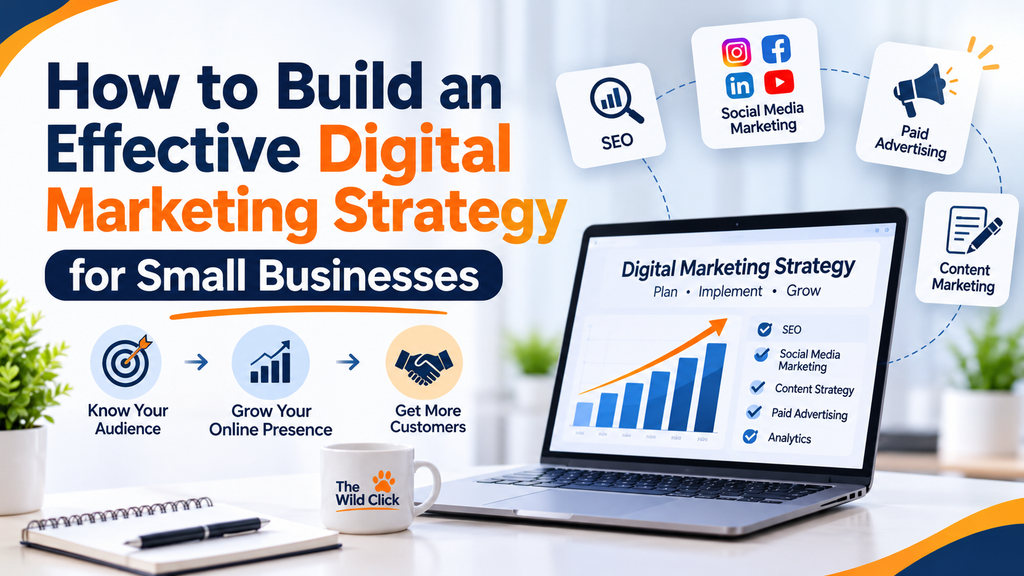
Running a small business in today’s competitive market requires more than just offering quality products or services. Businesses also need a strong online presence to reach potential customers, build trust, and generate consistent leads. A well-planned digital marketing strategy for small businesses helps companies connect with their target audience and compete effectively in the digital marketplace.
Whether you own a startup, a local business, or an established company, investing in the right marketing activities can make a significant difference. With the right guidance from The Wild Click, businesses can explore digital marketing solutions that support long-term growth and improve their online visibility.
1. Understand Your Target Audience
The first step in creating a successful digital marketing strategy is understanding your audience. Before investing in advertisements or creating content, identify who your potential customers are.
Consider factors such as:
- Age, location, and interests
- Customer needs and preferences
- Online shopping and browsing habits
- Problems your products or services can solve
- Platforms your audience uses most frequently
Understanding these factors helps businesses create relevant marketing messages and reach people who are more likely to become customers.
2. Build a Professional Website
Your website is often the first interaction potential customers have with your business. A professional, user-friendly website creates a positive impression and makes it easier for visitors to learn about your products and services.
An effective business website should include:
- Simple and easy navigation
- Mobile-friendly design
- Fast loading speed
- Clear service and product information
- Contact details and inquiry options
- Relevant and informative content
A well-structured website also creates a strong foundation for SEO and other online marketing strategies. Businesses looking to improve their digital presence can explore The Wild Click for professional digital marketing and website-related solutions.
3. Invest in Search Engine Optimization (SEO)
Search Engine Optimization (SEO) is an important part of small business digital marketing. It helps websites appear in relevant search engine results when potential customers look for products, services, or information.
Some essential SEO practices include:
Keyword Research: Identify the search terms your potential customers use and naturally include relevant keywords in your website content.
On-Page SEO: Optimize page titles, meta descriptions, headings, URLs, and internal links.
Quality Content: Publish informative blogs and website content that answers customer questions.
Technical SEO: Improve website speed, mobile usability, indexing, and overall website structure.
Local SEO: Optimize your Google Business Profile and maintain consistent business information to improve local visibility.
SEO requires consistency, but it can help businesses attract relevant organic traffic over time.
4. Use Social Media Marketing to Connect With Customers
Social media platforms provide small businesses with opportunities to communicate directly with their audiences. Platforms such as Instagram, Facebook, LinkedIn, and YouTube can help brands increase awareness and build customer relationships.
Here are some effective social media marketing practices:
- Create a consistent content calendar.
- Share educational and informative posts.
- Use short-form videos and engaging reels.
- Respond to comments and customer messages.
- Share customer reviews and testimonials.
- Maintain consistent branding across platforms.
Instead of focusing only on the number of followers, businesses should prioritize engagement, meaningful interactions, and conversions.
A coordinated marketing approach from The Wild Click can help businesses bring content, social media, and other digital marketing activities together.
5. Explore Paid Advertising for Faster Reach
Organic marketing takes time, while paid advertising can help businesses reach targeted audiences more quickly.
Google Ads and Meta Ads are two popular advertising options for small businesses.
Google Ads: These advertisements help businesses connect with people actively searching for specific products or services.
Facebook and Instagram Ads: These platforms allow businesses to target audiences based on interests, demographics, location, and online behavior.
To make paid campaigns more effective:
- Set clear advertising objectives.
- Define your target audience.
- Create attractive ad creatives.
- Write compelling ad copy.
- Set a realistic advertising budget.
- Track leads, conversions, and return on ad spend.
Businesses should regularly review campaign performance and make adjustments based on actual results.
6. Create Valuable and Consistent Content
Content marketing helps businesses educate their audiences, establish credibility, and build stronger relationships with potential customers.
Some useful content formats include:
- Informative blog articles
- Social media posts
- Educational videos
- Industry guides
- Case studies
- Frequently asked questions
- Email newsletters
For example, a small fitness business can publish workout tips, nutrition guidance, and beginner fitness advice to attract people interested in health and fitness.
The goal should be to provide useful information rather than constantly promoting products or services.
7. Track Performance and Analyze Results
A successful digital marketing strategy should always be supported by performance tracking. Without measuring results, businesses may struggle to understand which activities are delivering value.
Some important metrics to monitor include:
- Website traffic
- Organic search rankings
- Social media engagement
- Cost per lead
- Conversion rate
- Customer acquisition cost
- Return on ad spend (ROAS)
Tools such as Google Analytics 4, Google Search Console, and Looker Studio can help businesses understand their marketing performance.
Regular reporting also helps identify opportunities for improvement and supports better decision-making.
8. Why Small Businesses Need a Consistent Digital Marketing Approach
Digital marketing is not a one-time activity. It requires continuous planning, content creation, campaign optimization, and performance analysis.
When SEO, social media, paid advertising, and content marketing work together, businesses can create a stronger online presence and reach customers at different stages of their buying journey.
Working with a professional digital marketing team can also make these activities easier to manage. The Wild Click brings multiple digital marketing services together, helping businesses maintain a consistent strategy with coordinated execution and performance tracking.
Conclusion
Building an effective digital marketing strategy for small businesses requires a clear understanding of the target audience, a professional website, consistent content, effective SEO, and well-managed advertising campaigns.
Businesses do not need to use every marketing channel immediately. Starting with the right priorities, tracking performance, and improving campaigns over time can create sustainable results.
If you want to strengthen your online presence and explore practical ways to grow your business, visit The Wild Click to discover digital marketing solutions designed to support business growth.