
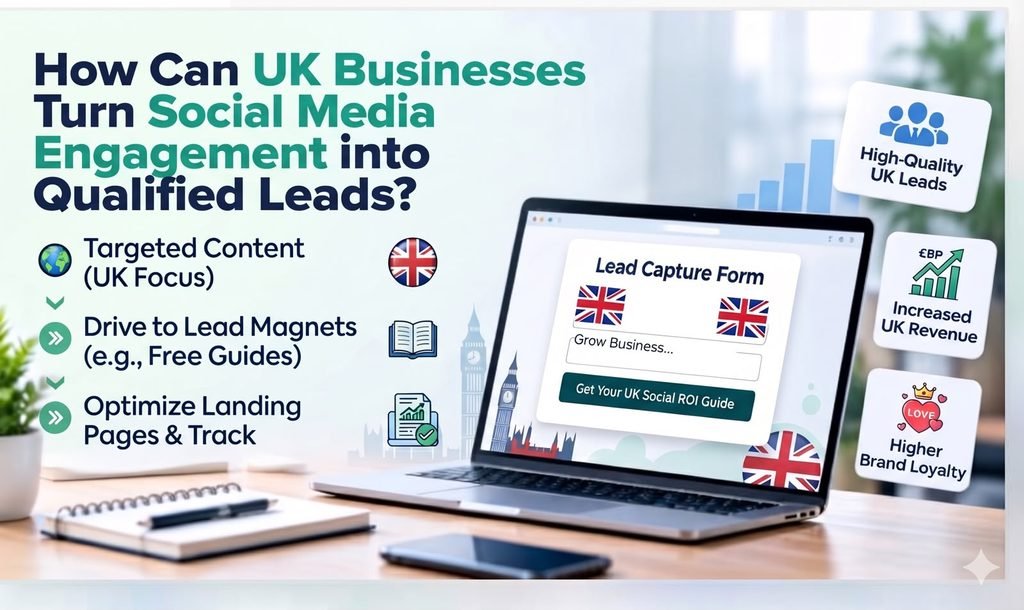
Getting likes, comments and followers on social media feels great. But here is the real question: Are those interactions actually bringing customers to your business?
For many UK businesses, social media has become an important way to connect with potential customers. From local cafés in London to service providers in Birmingham and growing brands in Manchester, businesses are using platforms like Instagram, Facebook and LinkedIn to build their online presence.
However, having thousands of followers does not automatically mean having more sales. A post can receive hundreds of likes but generate no enquiries. On the other hand, a well-planned campaign with a smaller audience can attract people who are genuinely interested in your products or services.
The real goal is not simply to increase engagement. It is to turn that engagement into meaningful conversations, enquiries and paying customers.
So, how can UK businesses make social media work harder for their growth? Let’s explore some practical strategies.
Why Is Social Media Engagement Not Always Generating Leads?
Imagine a UK-based interior design company posting beautiful room transformations on Instagram. The pictures receive plenty of likes and positive comments, but nobody requests a consultation.
What went wrong?
The problem may not be the content itself. It could be that the business is attracting attention without giving people a clear reason to take the next step.
Some common reasons include:
- No clear call to action: People enjoy the content but do not know what to do next.
- Wrong target audience: Posts reach people who are interested in the topic but are unlikely to become customers.
- Unclear service information: Potential customers cannot easily understand what the business offers.
- Weak landing pages: Interested users visit the website but struggle to find information or submit an enquiry.
- Inconsistent follow-ups: Businesses receive messages and comments but fail to respond quickly or guide potential customers further.
Social media should not operate as a separate activity. It should connect with your website, content and wider marketing strategy.
Businesses looking to create a stronger online presence can explore The Wild Click for digital marketing insights and services that connect different marketing channels.
Which Social Media Platforms Should UK Businesses Focus On?
Not every platform is suitable for every business. Choosing the right channel depends on your audience, industry and marketing goals.
Instead of trying to maintain an active presence everywhere, focus on platforms where your potential customers are most likely to spend time.
| Social Media Platform | Best Suited For | Content Ideas |
|---|---|---|
| Lifestyle brands, retail, beauty, food and creative businesses | Reels, product showcases, customer stories | |
| Local businesses, community-focused brands and service providers | Local updates, customer reviews, promotional posts | |
| B2B companies, consultants and professional services | Industry insights, case studies, business updates | |
| TikTok | Brands targeting audiences who enjoy short-form video content | Tutorials, behind-the-scenes videos, product demonstrations |
| YouTube | Businesses offering educational or demonstration-based content | How-to videos, product explainers, customer stories |
For example, a UK-based recruitment consultancy may find LinkedIn more useful for reaching professionals, while a fashion retailer may benefit from Instagram and TikTok.
The important thing is to choose platforms based on audience behaviour rather than popularity alone.
7 Practical Ways to Turn Social Media Engagement into Qualified Leads
Getting attention is the first step. The next step is giving interested people a reason to connect with your business.
Here are seven strategies that can help.
1. Create Content That Solves Real Customer Problems
People are more likely to engage with content that answers their questions or helps them make better decisions.
Instead of constantly promoting your services, understand what your audience wants to know.
For example:
- A UK accounting firm can share tips about preparing for Self Assessment.
- A digital marketing agency can explain common website SEO mistakes.
- A fitness studio can publish beginner-friendly workout guides.
- A home renovation company can share budgeting and planning advice.
Educational content builds trust because it demonstrates that your business understands its audience.
2. Add Clear Calls to Action to Your Posts
Never assume that people automatically know what to do after viewing your content.
A simple call to action (CTA) can guide them towards the next step.
Here are some examples:
- Want to improve your website visibility? Book a consultation today.
- Looking for professional support? Send us a message.
- Need help choosing the right service? Explore our website.
- Download our free guide to learn more.
Keep your CTA relevant to the content. A useful educational post may encourage readers to download a guide, while a service-focused post can invite them to request a quote.
3. Use Customer Reviews and Testimonials to Build Trust
Before contacting a business, many potential customers look for proof that it delivers what it promises.
Customer reviews, testimonials and real project results can help reduce uncertainty.
Share genuine customer feedback, completed projects and case studies where permission has been given. For UK audiences, displaying authentic reviews and responding professionally to feedback can also strengthen your brand reputation.
Avoid exaggerated claims. Honest and specific experiences are more convincing than generic promotional statements.
4. Create Lead Magnets That Give People a Reason to Connect
Sometimes, potential customers are interested in your business but are not ready to make a purchase.
This is where lead magnets can help.
A lead magnet is a useful free resource offered in exchange for contact details, usually an email address.
Examples include:
- Free downloadable guides
- Industry checklists
- Website or SEO audits
- Product comparison guides
- Free consultation sessions
- Educational webinars
For example, a digital marketing agency targeting UK small businesses could offer a free website SEO checklist. People who download it may later become interested in professional SEO services.
Make sure contact details are collected and used in accordance with applicable UK data protection and marketing requirements.
5. Optimise Your Social Media Profiles for Enquiries
Your social media profile should make it easy for visitors to understand your business and contact you.
Check whether your profile includes:
- A clear business description
- Relevant keywords in the bio
- Professional profile and cover images
- Website link
- Contact information
- A clear explanation of your services
- Highlights or pinned posts explaining important information
Think of your profile as a small landing page. When someone visits it, they should quickly understand what you offer and how to get in touch.
6. Use Paid Social Media Campaigns Strategically
Organic content helps build long-term relationships, but paid advertising can help businesses reach relevant audiences more directly.
Platforms such as Facebook, Instagram and LinkedIn offer advertising options that businesses can use to promote services, generate enquiries and reach specific audience groups.
However, running advertisements without a clear objective can waste money.
Before launching a campaign, decide whether you want website visits, form submissions, messages, bookings or sales. Then create an advertisement and landing page that support that goal.
7. Respond to Comments and Messages Quickly
A potential customer who sends a message is showing interest in your business.
A delayed response can create a poor first impression and may cause that person to contact a competitor instead.
Try to:
- Reply to genuine enquiries promptly.
- Answer questions clearly.
- Share relevant service information.
- Guide interested users towards booking or requesting a quote.
- Follow up professionally when appropriate.
Good communication can turn a simple social media interaction into a valuable business opportunity.
Organic Social Media vs Paid Social Media: Which Is Better for Lead Generation?
Both organic and paid social media can support lead generation, but they serve different purposes.
| Comparison Factor | Organic Social Media | Paid Social Media |
|---|---|---|
| Main Purpose | Builds relationships and brand awareness | Reaches targeted audiences and supports campaign objectives |
| Cost | No direct advertising spend, but requires time and resources | Requires an advertising budget |
| Audience Reach | Depends on followers, sharing and platform distribution | Can reach selected audience groups through targeting |
| Lead Generation | Develops interest over time | Can generate enquiries through dedicated campaigns |
| Best Content | Educational posts, stories, reels and community updates | Lead ads, promotional creatives and campaign-specific offers |
| Results | Usually develop gradually | Can generate quicker visibility, depending on the campaign |
Which should you choose?
For most businesses, combining both approaches is a practical option. Organic content builds trust and keeps your audience connected, while paid campaigns can help promote specific offers and reach potential customers.
The right balance depends on your business goals, audience and available budget.
How Can You Measure Social Media Lead Generation Success?
Likes and followers are useful engagement indicators, but they do not tell the complete story.
If your goal is to generate business enquiries, you need to monitor metrics that show whether people are taking meaningful action.
| Metric | What It Tells You | Why It Matters |
|---|---|---|
| Engagement Rate | How people interact with your content | Shows whether your content connects with the audience |
| Link Clicks | How many people visit your website through social media | Indicates interest beyond the post |
| Conversion Rate | Percentage of visitors who complete a desired action | Helps measure how effectively your pages generate leads |
| Cost Per Lead (CPL) | Average advertising cost for each lead | Helps evaluate campaign efficiency |
| Qualified Leads | Number of enquiries that match your target customer profile | Shows the quality of leads generated |
| Return on Ad Spend (ROAS) | Revenue generated compared with advertising spend | Helps evaluate advertising returns |
Use tools such as Google Analytics 4, Meta Ads Manager and reporting dashboards to understand campaign performance.
Most importantly, do not judge success using one metric alone. A campaign generating fewer but more relevant enquiries may be more valuable than one producing a large number of low-quality leads.
What Mistakes Should UK Businesses Avoid When Using Social Media for Leads?
Even a well-designed social media strategy can underperform when businesses overlook basic details.
Avoid these common mistakes:
- Posting only promotional content: Constant sales messages can make audiences lose interest.
- Ignoring audience questions: Unanswered comments and messages can lead to missed opportunities.
- Using the same content everywhere: Each platform has a different audience and content style.
- Ignoring mobile users: Most social media interactions happen on mobile devices, so your website and landing pages should work smoothly on smaller screens.
- Buying followers or engagement: Artificial engagement does not create genuine customer relationships.
- Not tracking conversions: Without measurement, you cannot identify which activities are generating useful enquiries.
- Giving up too early: Building trust and generating quality leads requires consistency and regular improvement.
A strong social media strategy is not about posting more frequently. It is about making every activity contribute to a clear objective.
How Can The Wild Click Help Businesses Build a Stronger Digital Presence?
Managing social media, website content, SEO and paid campaigns separately can make it difficult to maintain a consistent marketing strategy.
The Wild Click offers digital marketing support across areas such as social media marketing, SEO, paid media, content writing, web design and development, video editing, and analytics and reporting.
Instead of looking at social media engagement in isolation, businesses can connect their content, website experience and advertising activities to support wider marketing goals.
Whether you want to improve brand awareness, attract relevant website visitors or generate more enquiries, explore The Wild Click to learn how a coordinated digital marketing approach can support your business.
You can also explore its digital marketing services to understand how different channels can work together.
Frequently Asked Questions (FAQs)
1. How can social media generate leads for a business?
Social media can generate leads through educational content, targeted advertising, clear calls to action, customer testimonials, lead forms and direct conversations with potential customers.
2. Which social media platform is best for UK businesses?
The best platform depends on the target audience and industry. LinkedIn can be useful for B2B businesses, while Instagram and Facebook may suit consumer-focused and local businesses.
3. How often should a business post on social media?
There is no universal posting frequency. Businesses should follow a consistent content schedule that they can maintain while prioritising quality and audience relevance.
4. Are paid social media ads worth it for small businesses?
Paid advertising can be useful when campaigns have clear objectives, relevant targeting, suitable creatives and a well-designed landing page. Businesses should monitor cost per lead and conversion quality.
5. How long does it take to generate leads through social media?
The timeline varies depending on the industry, audience, content quality and marketing budget. Paid campaigns may generate enquiries sooner, while organic social media generally requires consistent effort to build trust and visibility.
Conclusion
Social media success is not measured by likes and followers alone. For UK businesses, the real opportunity lies in turning audience attention into genuine interest, meaningful conversations and qualified enquiries.
By creating useful content, using clear calls to action, building trust through customer experiences, optimising profiles and tracking the right metrics, businesses can make their social media efforts more valuable.
Remember, every post should have a purpose. When your social media activity connects with your website and wider digital marketing strategy, engagement becomes more than just a number — it becomes an opportunity for business growth.