
Running a small business in 2026 is not just about offering a good product or service. It is also about making sure the right people can find your business online. Customers search on Google, explore social media, compare different options, and read reviews before deciding whom to trust.
This is where digital marketing for small businesses becomes important. It helps businesses improve their online visibility, connect with potential customers, generate leads, and build long-term relationships without relying entirely on traditional advertising.
Whether you run a local shop, a startup, a service-based business, or an online store, having a clear digital marketing strategy can help you compete in today’s digital marketplace.
In this guide, we will explore how digital marketing helps small businesses grow, which strategies are worth considering, and how to choose the right approach for your business.
What Is Digital Marketing for Small Businesses?
Digital marketing involves promoting your business through online channels such as search engines, websites, social media platforms, and paid advertising.
For small businesses, the goal is simple: reach relevant people, communicate your value, and encourage them to take action.
For example, a local service provider can use SEO to appear in relevant Google searches, Google Ads to reach people actively looking for a service, and social media marketing to showcase their work and build trust.
The best strategy depends on your target audience, business goals, budget, and the services or products you offer.
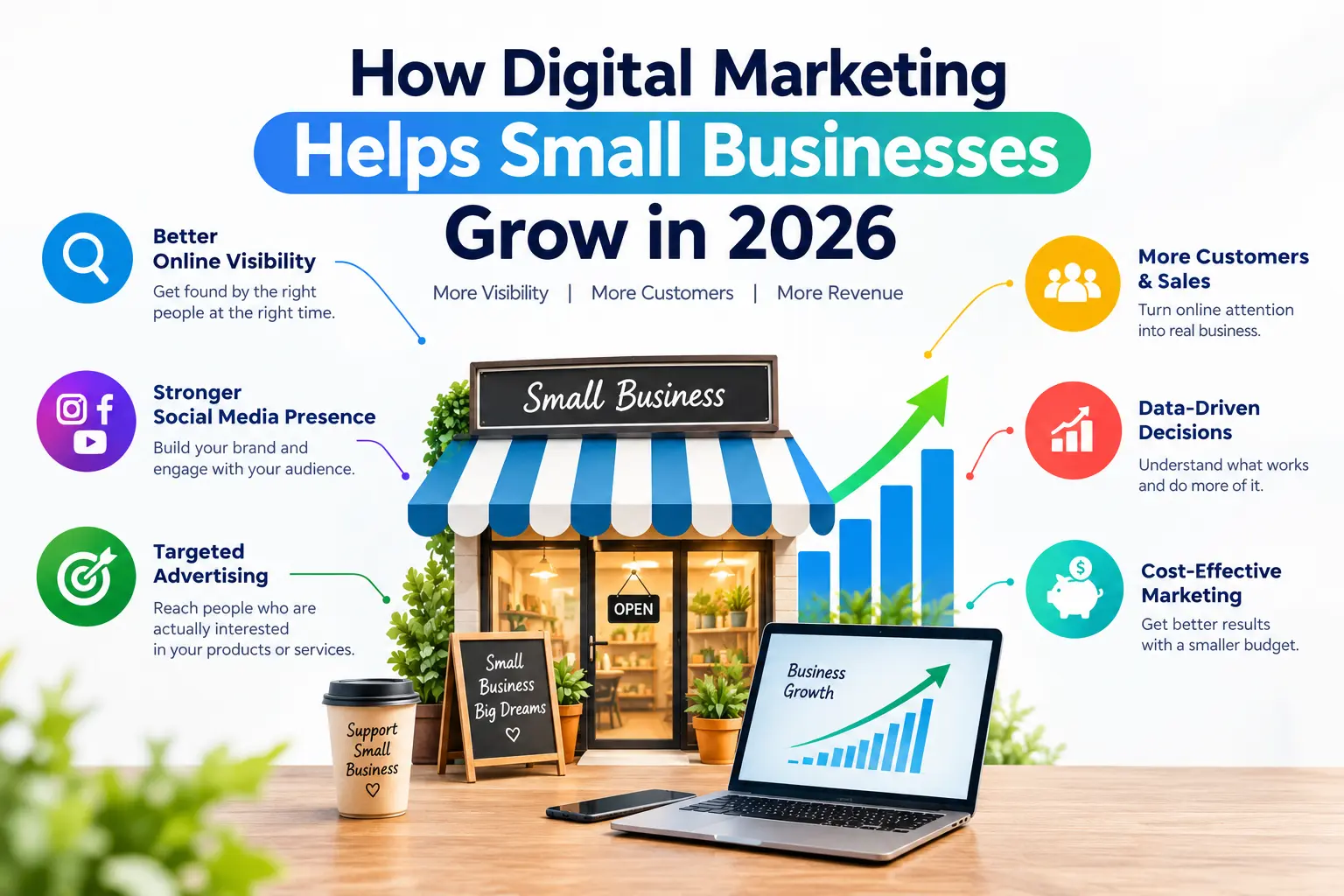
7 Ways Digital Marketing Helps Small Businesses Grow
1. Improves Online Visibility
Your potential customers cannot choose your business if they do not know it exists. A strong online presence makes it easier for people to discover your brand when they search for relevant products or services.
Search engine optimization (SEO) helps improve your website’s visibility in organic search results. Meanwhile, social media platforms allow you to share useful content, introduce your services, and stay connected with your audience.
For businesses that serve a specific location, local SEO can also help improve visibility in location-based searches.
Practical tip: Start by optimizing your website, maintaining accurate business information, and publishing content that answers the questions your customers frequently ask.
2. Helps You Reach the Right Audience
Traditional advertising often reaches a broad audience, including people who may not be interested in your offering. Digital marketing gives businesses more ways to focus on relevant audiences.
For example, Google Ads can help you reach users searching for specific services, while Meta Ads can help you connect with people based on available audience and campaign targeting options.
The key is to understand your ideal customer before spending money on advertising.
Consider their location, needs, interests, budget, and the problems they want to solve. This makes it easier to develop campaigns that communicate the right message to the right people.
3. Generates More Leads and Sales Opportunities
Getting website traffic is useful, but traffic alone does not guarantee business growth. You also need to give visitors a clear reason to contact you or make a purchase.
A well-planned digital marketing strategy can generate leads through contact forms, landing pages, phone calls, WhatsApp enquiries, and other relevant conversion methods.
For instance, a service-based business can run a Google Ads campaign targeting high-intent searches and direct visitors to a dedicated landing page. The page can explain the service, highlight its benefits, answer common questions, and include a clear call to action.
Businesses should also track enquiries, qualified leads, and sales to understand which campaigns are delivering meaningful results.
4. Builds Trust and Brand Credibility
Customers are more likely to consider a business when they can find useful information about it online.
A professional website, helpful blog articles, consistent social media content, and genuine customer reviews can help build credibility over time.
Content marketing is particularly useful because it allows businesses to answer customer questions before a purchase decision is made.
For example, a website development company can publish articles explaining website costs, common design mistakes, and ways to improve website performance. This demonstrates knowledge and helps potential customers make informed decisions.
The objective is not simply to promote your business in every post. It is to provide information that people genuinely find useful.
5. Makes Marketing Performance Easier to Measure
One advantage of digital marketing is that businesses can measure different aspects of their marketing activity.
Depending on the tools used, you can track website visits, traffic sources, clicks, enquiries, conversion rates, and advertising costs.
These insights help you identify what is working and what needs improvement.
For example, if an advertising campaign receives many clicks but generates very few enquiries, the problem could be the landing page, audience targeting, offer, or messaging.
Instead of making decisions based only on assumptions, businesses can use performance data to test changes and improve their campaigns.
However, accurate measurement depends on proper tracking setup and reliable conversion data.
6. Supports Growth on a Manageable Budget
Small businesses often have limited marketing budgets. Digital marketing allows them to start with selected channels and expand as they learn what works.
A business might begin with SEO and regular social media content before introducing paid advertising. Another business with an immediate lead-generation goal might start with a focused Google Ads campaign.
There is no single budget that works for every business. Costs depend on the industry, competition, target market, campaign objectives, and the resources required.
The important thing is to prioritize activities that support your business goals instead of trying every platform at once.
Remember that SEO generally takes time to build organic visibility, while paid advertising can bring traffic more quickly but requires ongoing investment.
7. Helps Build Long-Term Customer Relationships
Business growth is not only about finding new customers. Keeping existing customers engaged can also contribute to long-term success.
Email marketing, useful social media content, customer support, and relevant follow-up communication can help businesses maintain relationships with their audiences.
For example, an online store can share product updates and helpful buying advice with customers who have opted in to receive marketing emails.
A service-based business can follow up after completing a project, request genuine feedback, and stay in touch when it has something relevant to offer.
Consistent communication helps keep your brand familiar and gives customers a reason to return when they need your services again.
Which Digital Marketing Strategies Should Small Businesses Use in 2026?
Different businesses have different priorities. Rather than investing in every channel immediately, choose the strategies that match your current goals.
Search Engine Optimization (SEO)
SEO helps improve your website’s visibility in unpaid search results. It includes keyword research, helpful content, on-page optimization, technical improvements, and earning relevant backlinks.
SEO is worth considering if you want to build sustainable organic traffic over time.
Google Ads
Google Ads allows businesses to advertise to people searching for relevant products or services. It can be useful when you want to reach users who are already showing interest in a particular solution.
Campaign performance depends on keyword selection, ad quality, landing pages, competition, and conversion tracking.
Meta Ads
Meta Ads can help businesses reach audiences across Facebook and Instagram. Depending on your objectives, campaigns can focus on generating leads, increasing awareness, driving website visits, or encouraging enquiries.
Strong creative content, a relevant offer, and a well-designed lead journey are important for campaign performance.
Social Media Marketing
Social media marketing helps businesses share content, communicate with their audience, and develop a recognizable brand identity.
Consistency matters, but posting frequently without a clear purpose is not enough. Content should educate, answer questions, demonstrate value, or encourage meaningful engagement.
Website Development and Optimization
Your website is often an important part of your digital marketing strategy. It should explain what you offer, who you serve, and how customers can contact you.
A mobile-friendly design, clear navigation, useful content, fast-loading pages, and visible calls to action can make it easier for visitors to take the next step.
Explore our [website development services — insert your actual service page URL] to learn how a well-planned website can support your business goals.
How to Create a Simple Digital Marketing Plan
You do not need a complicated strategy to get started. Follow these five steps to build a practical foundation.
Step 1: Define your business goals.
Decide what you want to achieve. Your priorities might include generating qualified leads, increasing online sales, improving brand awareness, or attracting local customers.
Step 2: Understand your target audience.
Identify your ideal customers, their needs, the questions they ask, and the factors that influence their purchasing decisions.
Step 3: Choose the right marketing channels.
Select the channels that best match your goals. For example, SEO can support long-term organic visibility, while paid advertising may be more suitable when you want to test demand or generate leads sooner.
Step 4: Create useful content and optimize your website.
Publish content that answers customer questions, explains your services, and makes it easy for visitors to contact your business.
Step 5: Measure results and improve.
Review your performance regularly. Track relevant metrics such as qualified leads, conversion rate, cost per lead, and sales rather than focusing only on views or clicks.
A good marketing plan should evolve as you learn more about your customers and your campaign performance.
Common Digital Marketing Mistakes Small Businesses Should Avoid
Even a well-funded marketing campaign can struggle when the basics are overlooked. Here are some common mistakes to watch out for:
- Targeting everyone: Trying to reach every possible customer can make your messaging less relevant.
- Ignoring website experience: A confusing or outdated website can discourage potential customers from enquiring.
- Expecting instant SEO results: Organic search visibility generally takes time and consistent effort to develop.
- Running ads without tracking: Without conversion tracking, it becomes difficult to understand which campaigns generate genuine business results.
- Posting without a strategy: Content should serve a clear purpose instead of simply filling a publishing calendar.
- Focusing only on low-cost leads: A low cost per lead is not necessarily a sign of success if those leads are unlikely to become customers.
Avoiding these mistakes can help you make better use of your time, budget, and marketing resources.
How The Wild Click Can Help Your Business Grow
Choosing the right marketing activities can be challenging when you are already managing day-to-day business operations. A clear strategy can help you focus on the channels and improvements that matter most.
At The Wild Click, we help businesses strengthen their digital presence through services designed to support their online growth goals.
Our services include:
- SEO: Improve your website’s organic search visibility through relevant optimization strategies.
- Meta Ads: Develop Facebook and Instagram advertising campaigns to support lead generation and other business objectives.
- Google Ads: Reach potential customers through targeted paid search and advertising campaigns.
- Website Development: Build a professional online presence with a website designed around your business needs.
Explore our About Us page to learn more about The Wild Click and our approach.
You can also visit our Services page to explore the digital marketing solutions available for your business.
The right combination of services depends on your goals, audience, competition, and budget. A clear understanding of these factors can help you prioritize your next steps.
Final Thoughts
Digital marketing gives small businesses more opportunities to become visible, reach relevant customers, generate enquiries, and build lasting relationships.
However, growth rarely comes from a single tactic. It comes from understanding your audience, offering genuine value, choosing suitable marketing channels, and improving your approach based on real performance data.
Start with the fundamentals, set realistic goals, and focus on activities that support your business objectives. As you learn what works, you can gradually build a stronger and more effective digital marketing strategy.